
What is a CT Scan? A Comprehensive Guide for Patients
- Category: Radiology
- Date: 05-09-2017
Introduction: Seeing Inside the Body Without Surgery
Imagine you’ve been in a car accident, and doctors need to check for internal injuries. Or maybe your doctor suspects a tumor, blood clot, or infection deep inside your body. In these moments, CT scanning becomes a vital, often lifesaving tool. A CT (Computed Tomography) scan allows healthcare providers to see detailed images of the inside of the body — not just bones, but organs, tissues, and blood vessels. It’s quick, non-invasive, and often the first step in diagnosing everything from appendicitis to brain injuries.
What Exactly is a CT Scan?
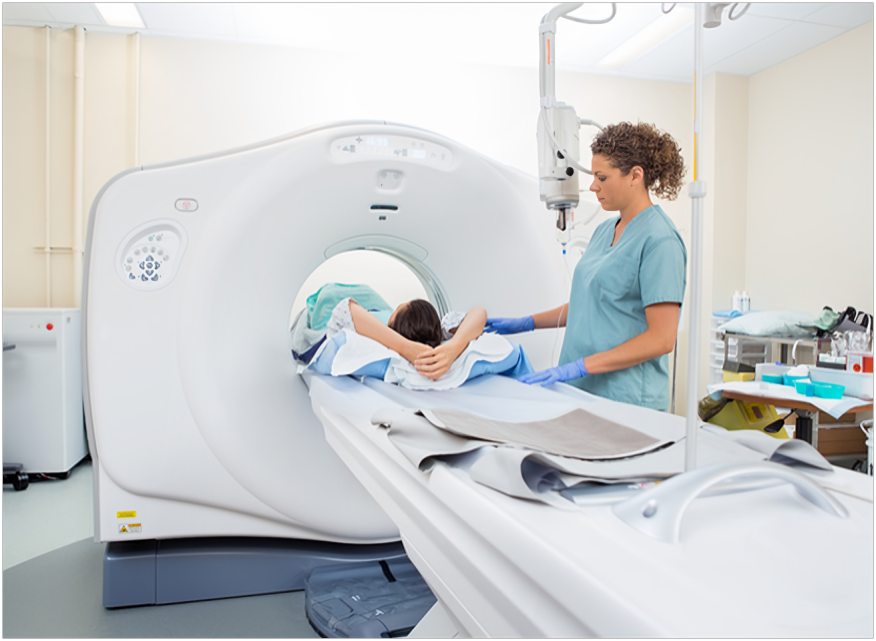
CT stands for Computed Tomography, a technique that combines X-ray technology with computer processing to create cross-sectional images — often referred to as “slices” — of your body. Instead of taking a single picture like a regular X-ray, a CT scanner rotates around the patient, taking multiple images from different angles. These images are then compiled by software to build a 3D model of the internal body structures.
How Does a CT Scanner Work?
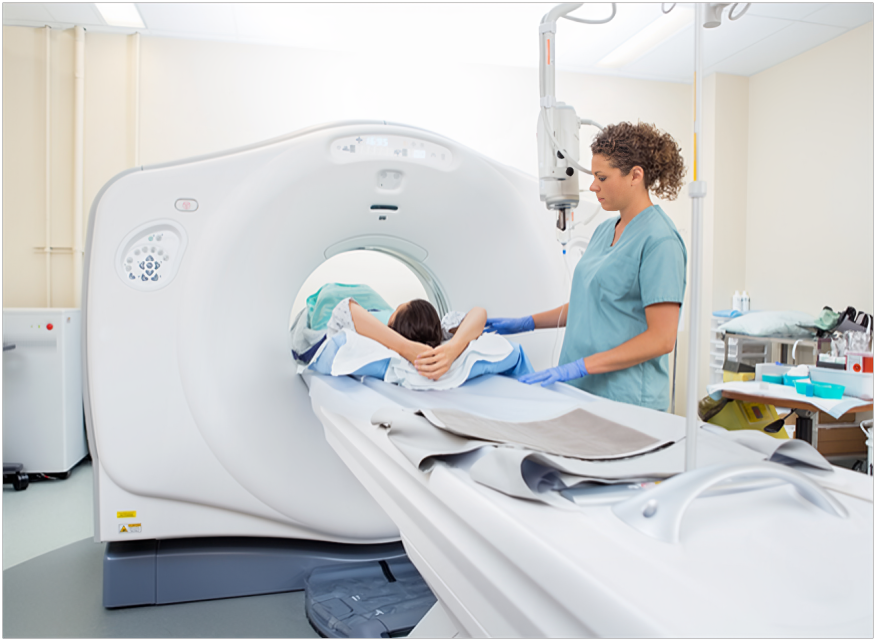
Here’s a simplified breakdown:
1. Patient lies flat on a motorized table.
2. The table slides into a large, donut-shaped scanner.
3. An X-ray tube rotates around the body while detectors capture the emitted rays.
4. The machine sends data to a computer, which reconstructs the “slices” into viewable images.
Common Reasons You Might Need a CT Scan
CT scans are incredibly versatile. Some of the most common reasons doctors order them include:
- Head injuries or strokes
- Chest pain or suspected blood clots in the lungs
- Abdominal pain (e.g., appendicitis, kidney stones)
- Bone fractures not clearly visible on X-ray
- Cancer detection and monitoring
- Infection tracking, such as abscesses
- Trauma evaluation (e.g., internal bleeding)
Types of CT Scans
Depending on what part of the body is being examined, you may hear terms like:
- Head CT – Evaluates brain injuries, strokes, or tumors.
- Chest CT – Checks for lung issues, clots, or heart problems.
- Abdomen/Pelvis CT – Assesses organs like liver, kidneys, intestines.
- CT Angiography (CTA) – Uses contrast dye to view blood vessels.
- Low-Dose CT – Often used for lung cancer screening in smokers.
What to Expect During the Procedure
Most CT scans take less than 15 minutes. Here’s what the experience typically includes:
**Preparation:** You may be asked to avoid food for a few hours. You’ll need to remove metal objects. A contrast agent might be used.
**During the Scan:** You lie still. The scanner makes whirring or clicking noises. You may be asked to hold your breath briefly.
**Afterward:** If contrast was used, drink fluids to flush it out. You can usually resume normal activities right away.
Is It Safe? Understanding Radiation Risks
Yes, CT scans are generally safe — but they do use ionizing radiation. A single chest CT delivers around 7 millisieverts (mSv). For comparison, a chest X-ray delivers ~0.1 mSv, while natural background radiation is ~3 mSv per year. Children and pregnant women are more sensitive to radiation, so alternatives like MRI may be used when appropriate.
Interpreting CT Scan Results
Your scan will be read by a radiologist. They look for changes in tissue density, masses, signs of bleeding or swelling. Your doctor will usually receive the report within a few hours to 1–2 days.
Patient Tips & FAQs
Q: Can I eat before a CT scan?
A: For most scans, yes. But if contrast is involved, you may need to fast.
Q: Is the scan painful?
A: No, the scan itself is painless. The IV contrast may cause mild warmth.
Q: Will I feel claustrophobic?
A: The CT scanner is open on both ends — far less confined than an MRI.
Conclusion: A Window Into the Human Body
CT scans have become a cornerstone of modern medicine. From diagnosing life-threatening injuries to monitoring chronic conditions, they offer unmatched speed and detail. If your doctor recommends a CT scan, know that it’s a fast, accurate, and safe way to get answers — often when time is critical.