
MRI Identifies Brain Abscess in a Febrile Patient with Headache
- Category: Radiology
- Date: 07-08-2025
Introduction: Headache and Fever – A Neurological Red Flag
When patients present with headache and fever, clinicians must consider serious intracranial pathologies. One such condition is a brain abscess — a localized collection of pus within the brain parenchyma. MRI, particularly with contrast, is the most sensitive imaging modality for early diagnosis.
Case Presentation
A 36-year-old man arrived at the emergency department with worsening headache, low-grade fever, and nausea over 5 days. He had a history of chronic sinusitis but no recent head trauma or surgery. Neurological exam revealed mild confusion and photophobia.
Initial Evaluation
- Vitals: Temp 100.8°F, HR 92, BP 132/78 mmHg
- CBC: Elevated WBC count (15,000/mm³)
- CRP and ESR elevated
- CT brain (non-contrast): Showed a vague hypodensity in the left frontal lobe
MRI Findings
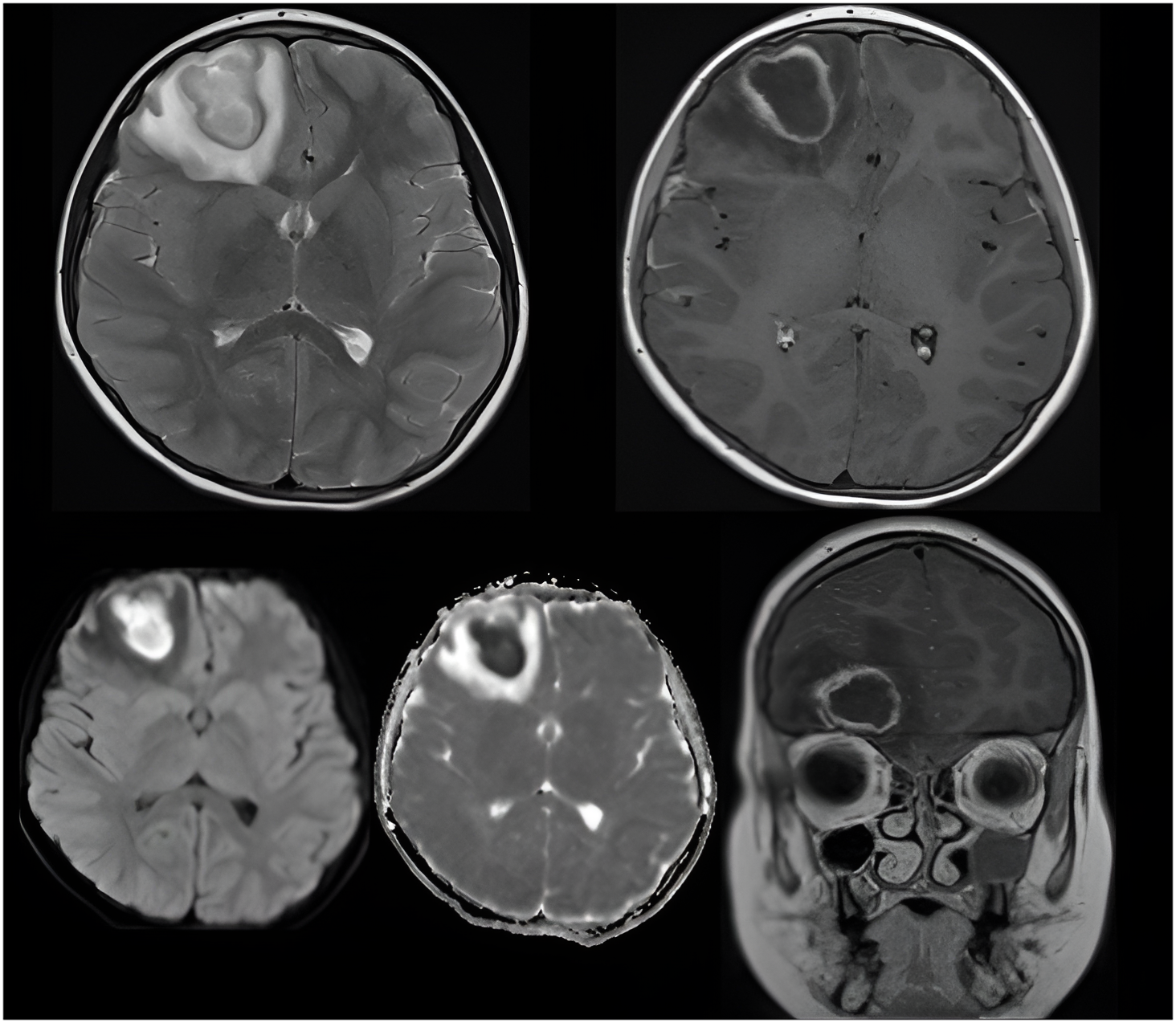
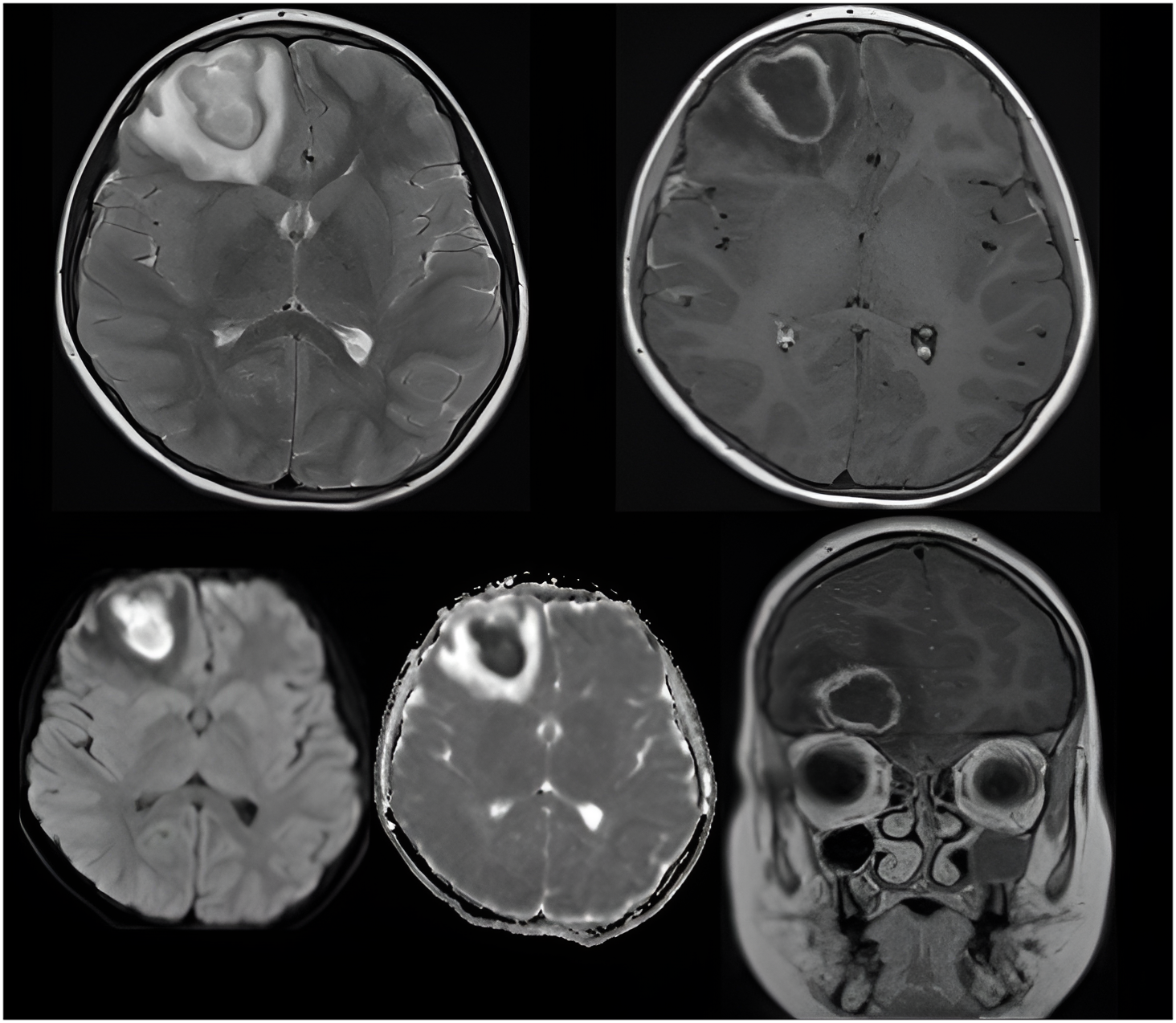
- MRI with contrast revealed a **ring-enhancing lesion** in the left frontal lobe (2.8 cm), with surrounding edema and mass effect
- Diffusion-weighted imaging (DWI) showed **restricted diffusion** within the lesion — a hallmark of abscess
- MR spectroscopy showed elevated lactate and amino acids
Diagnosis: Brain Abscess (Likely Sinogenic Origin)
Based on imaging, clinical signs, and history, a pyogenic brain abscess secondary to frontal sinusitis was diagnosed.
Management
- Started on broad-spectrum IV antibiotics (ceftriaxone + metronidazole + vancomycin)
- Neurosurgical consult obtained
- Stereotactic aspiration performed to decompress the abscess and obtain cultures
- Cultures grew Streptococcus anginosus group
Why MRI Was Vital
- MRI with DWI is highly sensitive for detecting abscesses vs. tumors or necrotic metastases
- Provides detailed localization and information on edema/mass effect
- Enables pre-operative planning for drainage
Patient Outcome
- Patient improved clinically within 72 hours of treatment
- Follow-up MRI at 2 weeks showed reduced lesion size and edema
- Completed 6-week IV antibiotic course
- Full recovery without neurological deficits
Conclusion: MRI Can Uncover Hidden Infections in the Brain
Brain abscess is a medical emergency requiring rapid diagnosis and treatment. MRI played a crucial role in identifying the lesion, guiding treatment, and saving this patient from potentially life-threatening complications.