
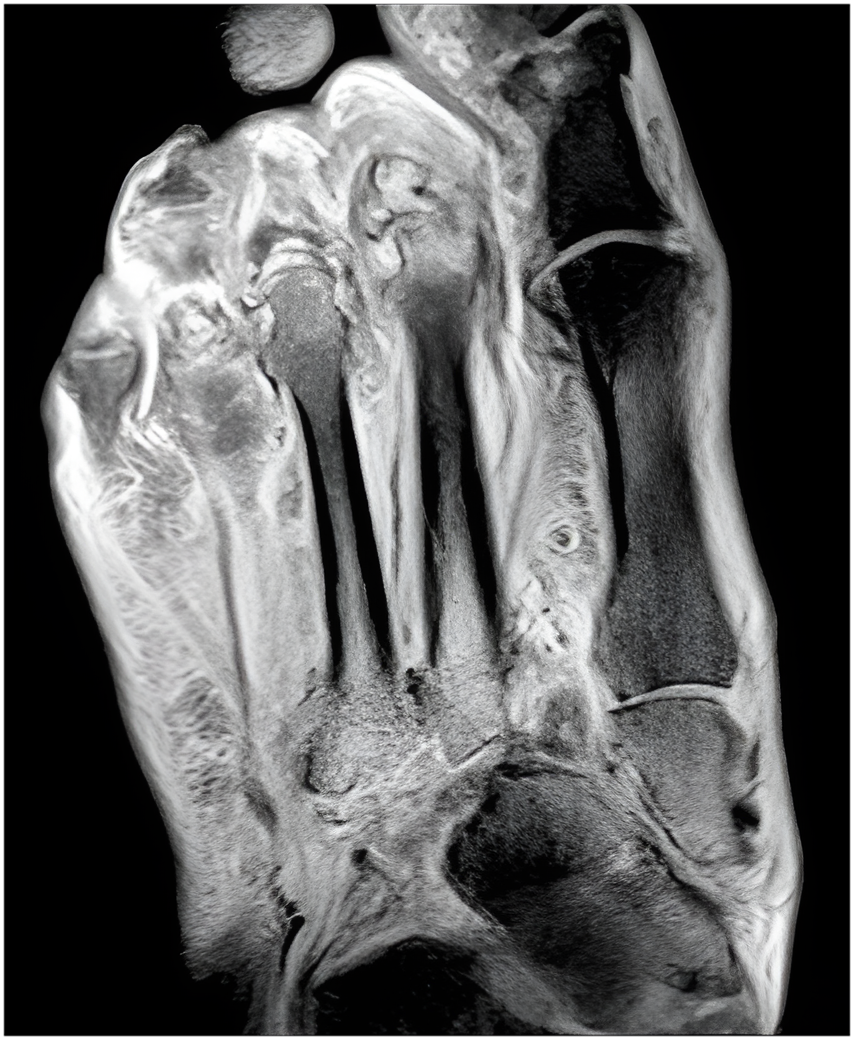
MRI Detects Osteomyelitis in a Diabetic Foot
- Category: Radiology
- Date: 07-08-2025
Introduction: A Hidden Complication in Diabetes
Foot ulcers are common in diabetic patients and can progress silently to osteomyelitis (bone infection). Early detection is crucial to prevent limb loss. MRI provides superior soft tissue and bone marrow contrast, making it the gold standard for diagnosing diabetic foot osteomyelitis.
Case Presentation
A 59-year-old male with poorly controlled type 2 diabetes presented with a non-healing ulcer over the plantar surface of the left foot for 3 weeks. He denied fever but had mild swelling and pain on walking.
Initial Evaluation
- Physical exam: 2 cm ulcer with purulent discharge, probing to bone
- ESR: 80 mm/hr, CRP elevated
- Plain X-ray: Showed soft tissue swelling but no definite bony erosion
- MRI of the foot was ordered to assess for deeper involvement
MRI Findings
- T1 hypointensity and T2 hyperintensity in the head of the second metatarsal bone
- Bone marrow edema with adjacent cortical destruction
- Enhancing sinus tract from ulcer to bone
- Surrounding cellulitis and soft tissue abscess noted
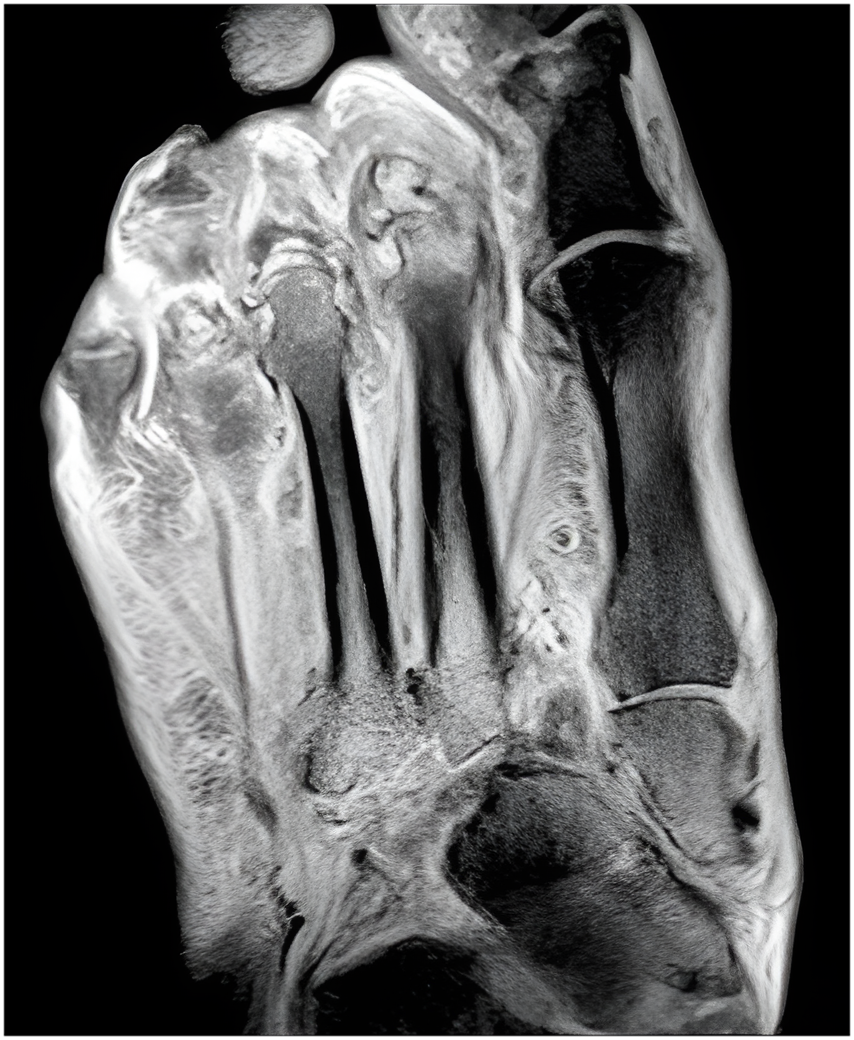
Diagnosis: Diabetic Foot Osteomyelitis with Cellulitis
MRI findings were consistent with osteomyelitis involving the second metatarsal with overlying infected ulcer.
Management
- Empiric IV antibiotics started (vancomycin + ceftriaxone)
- Surgical debridement performed with removal of necrotic bone
- Wound cultures grew MRSA
- Switched to targeted antibiotics for 6 weeks
Why MRI Was Critical
- High sensitivity and specificity for early osteomyelitis
- Defines the extent of bone, joint, and soft tissue involvement
- Aids in surgical planning and assessing response to therapy
Patient Outcome
- Gradual healing of the ulcer with off-loading and wound care
- Follow-up MRI at 6 weeks showed resolution of marrow edema
- Saved from major amputation due to early intervention
Conclusion: MRI Helps Preserve Limbs in Diabetics
Diabetic foot infections can escalate quickly. MRI plays a central role in early detection of osteomyelitis, guiding precise treatment and minimizing long-term disability.