
MRI Identifies ACL Tear in a Teenage Athlete
- Category: Radiology
- Date: 07-08-2025
Introduction: A Common but Devastating Sports Injury
The anterior cruciate ligament (ACL) is crucial for knee stability, especially in athletes. ACL tears often occur during pivoting or high-impact movements and may not always be diagnosed on physical exam alone. MRI offers detailed insight into ligamentous and soft tissue injuries.
Case Presentation
A 16-year-old male soccer player presented to the sports medicine clinic after twisting his right knee during a match. He felt a ‘pop’ followed by immediate swelling and instability. He was unable to continue playing.
Initial Evaluation
- Swelling and joint effusion were noted
- Lachman test: Positive for anterior translation
- McMurray test: Mildly painful, no click
- X-ray: No fracture or dislocation
MRI Knee Findings
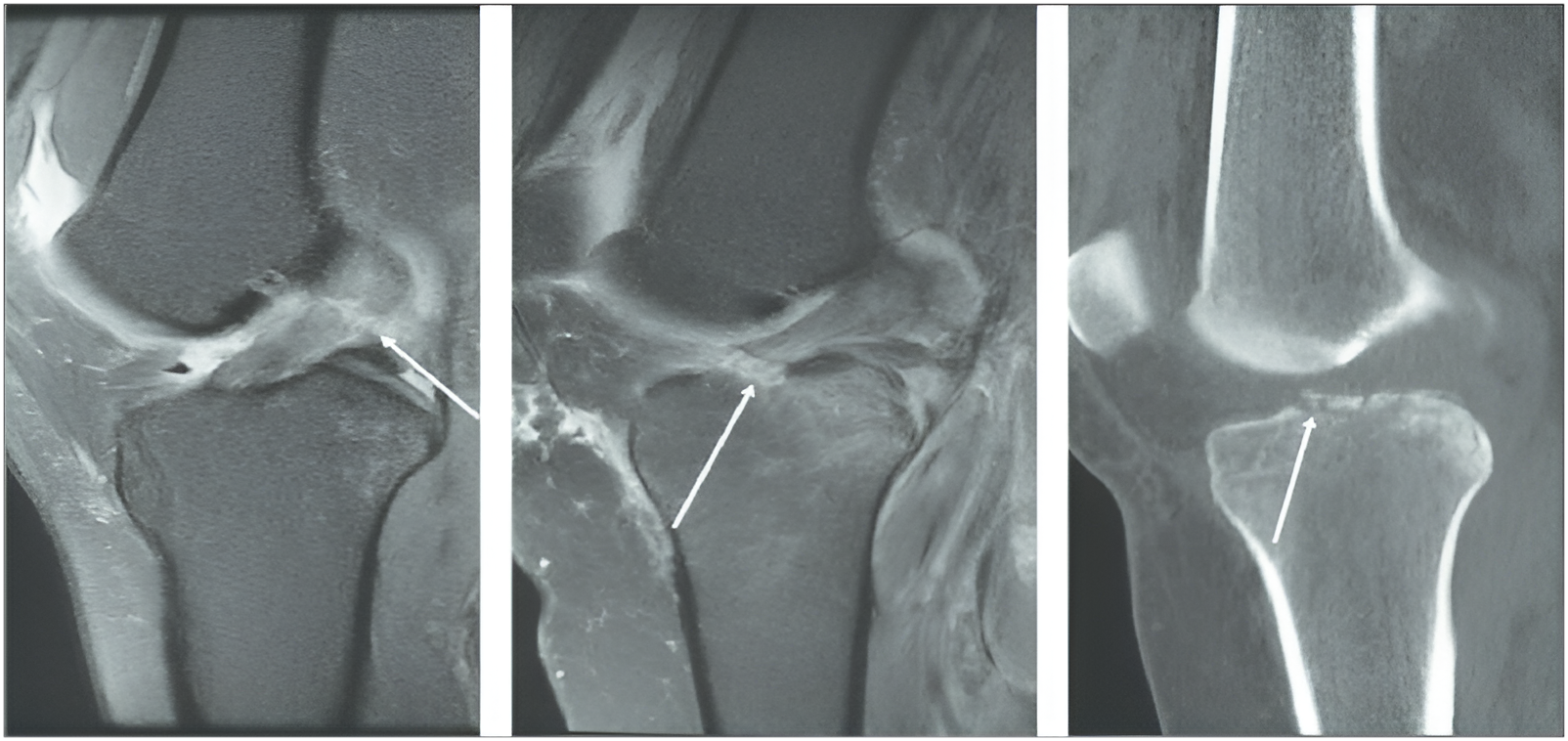
- Complete tear of the **anterior cruciate ligament** seen as discontinuity and increased signal on T2-weighted images
- Bone contusions noted on lateral femoral condyle and posterolateral tibial plateau
- Mild sprain of the medial collateral ligament (MCL)
- No meniscal tear observed
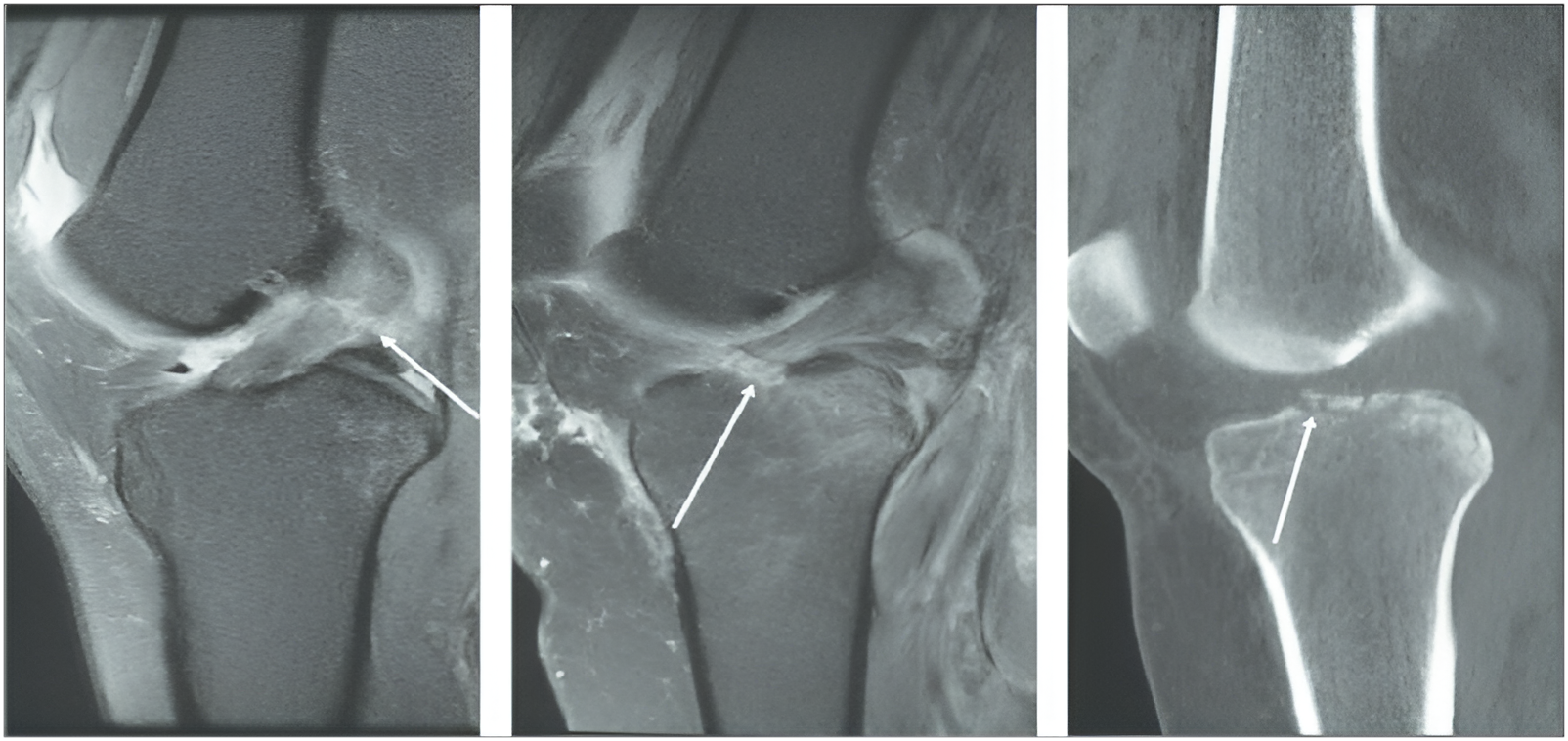
Diagnosis: Isolated ACL Tear with Bone Contusion
MRI confirmed a full-thickness ACL tear — a common sports-related knee injury.
Management
- Due to the patient’s age and activity level, surgical reconstruction was advised
- Underwent arthroscopic ACL reconstruction using hamstring graft
- Post-op rehabilitation started within one week focusing on range of motion and quadriceps strengthening
Why MRI Was Essential
- Provides detailed visualization of:
- ACL and PCL integrity
- Associated bone bruises
- Meniscal and collateral ligament damage
- Helps orthopedic surgeons plan surgical approach
- Non-invasive, highly sensitive imaging modality for ligament injuries
Patient Outcome
- Returned to non-contact sports training at 4 months
- Full return to competitive sports projected at 9–12 months post-op
- Ongoing physical therapy and injury prevention training
Conclusion: MRI Is the Gold Standard for Ligament Injuries
MRI enables early and accurate diagnosis of ACL injuries, especially in young athletes. Prompt imaging leads to better surgical planning, improved outcomes, and reduced risk of long-term instability or arthritis.