
MRI Detects Early Multiple Sclerosis in a Young Adult
- Category: Radiology
- Date: 07-08-2025
Introduction: When Subtle Symptoms Point to a Bigger Issue
Multiple sclerosis (MS) is a chronic, immune-mediated disease that targets the central nervous system. Early diagnosis is crucial to initiate disease-modifying therapies that can slow progression. This case illustrates how brain MRI enabled a diagnosis of MS in a patient with vague neurological complaints.
Case Presentation
A 27-year-old woman presented with intermittent tingling in her right arm and visual blurring in one eye for 10 days. She had no history of trauma or systemic illness. Neurological exam revealed mild weakness in the right hand and an afferent pupillary defect in the left eye.
Initial Workup
- Blood work: Normal CBC, ESR, ANA negative
- Visual evoked potentials: Prolonged latency in left optic nerve
- Due to suspicion of demyelinating disease, MRI brain and spine were ordered.
MRI Findings
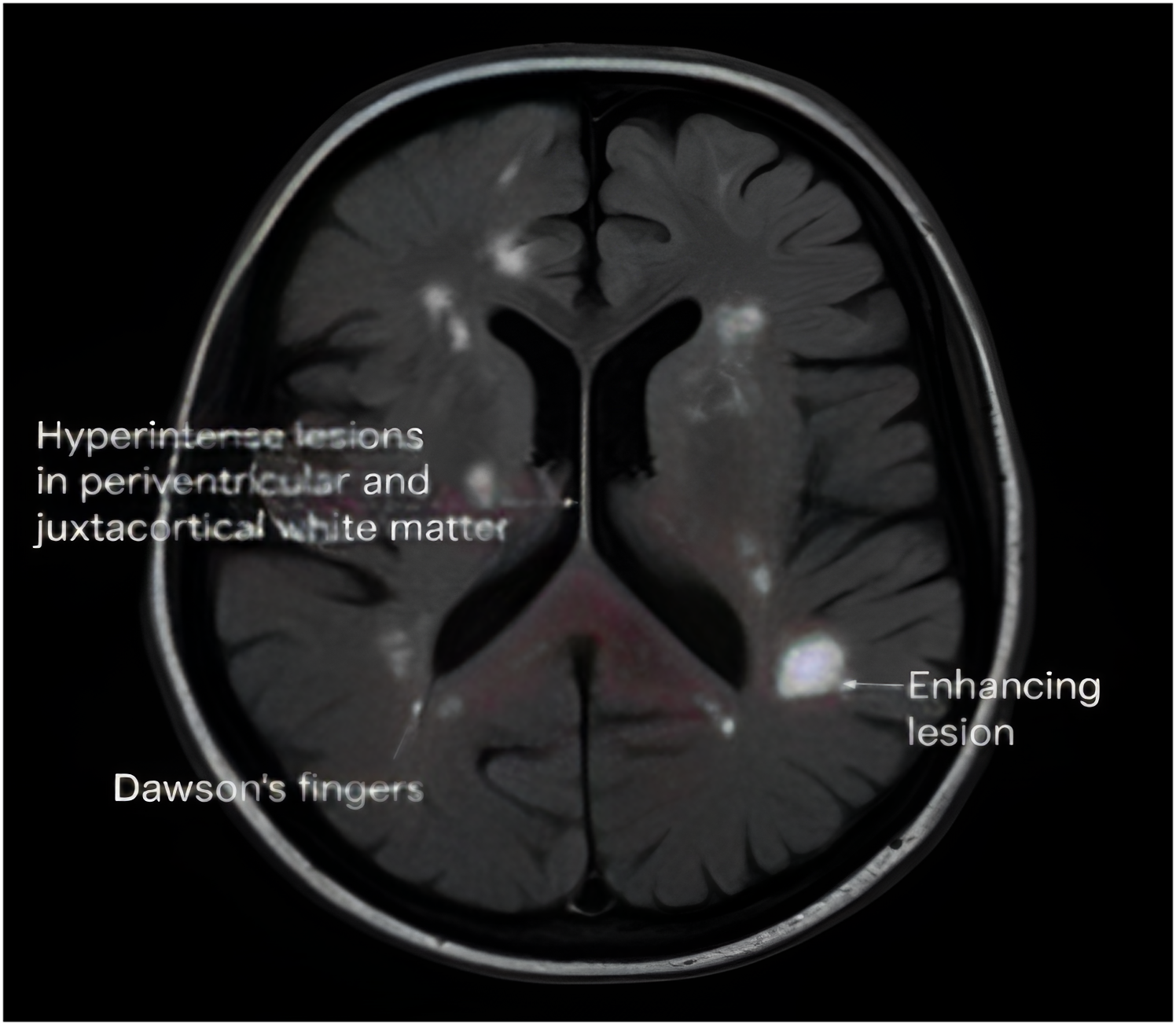
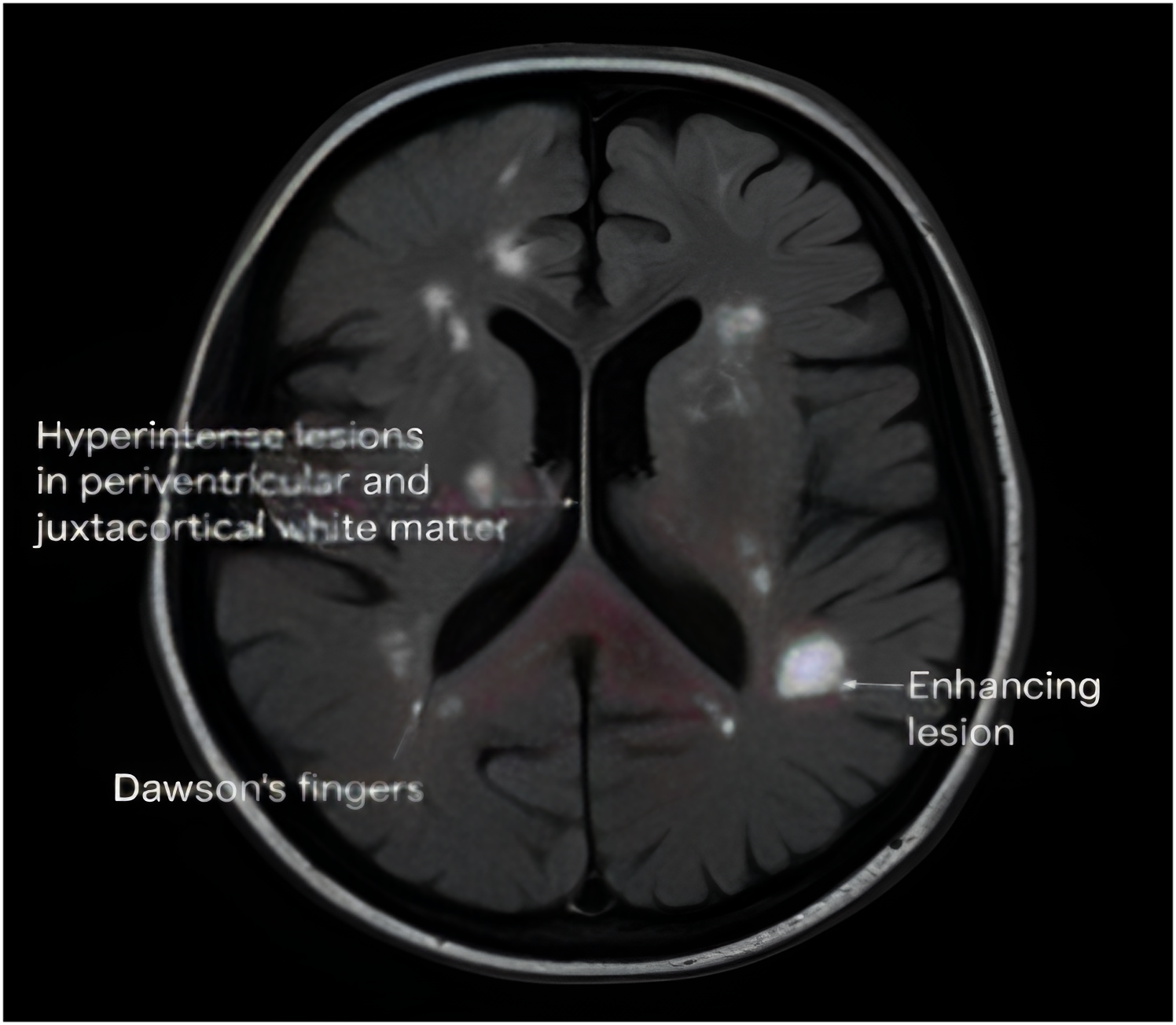
- T2-weighted and FLAIR sequences showed multiple hyperintense lesions in the periventricular and juxtacortical white matter.
- A classic ‘Dawson’s fingers’ pattern was seen — lesions perpendicular to the ventricles.
- One lesion showed gadolinium enhancement, suggesting recent activity.
- Cervical spine MRI revealed a non-enhancing lesion at C3.
Diagnosis: Clinically Isolated Syndrome (CIS) Suggestive of MS
- Based on the McDonald criteria, the patient had **dissemination in time and space**.
- She met the criteria for early relapsing-remitting multiple sclerosis (RRMS).
Management Plan
- Initiated on disease-modifying therapy (interferon beta-1a)
- Advised regular follow-up with MRI monitoring every 6 months
- Counseling and support group referral
- Vitamin D supplementation and lifestyle modifications to reduce flare risk
Why MRI Was Critical
- High sensitivity for detecting demyelinating plaques
- Differentiates new vs. old lesions with contrast enhancement
- Essential for diagnosis using standardized MS criteria (McDonald 2017)
Long-Term Outlook
- Early treatment improves long-term prognosis
- MRI helps track disease activity and treatment response
- Patient education on symptom monitoring and medication adherence is vital
Conclusion: MRI’s Role in Uncovering Silent Progression
In patients with unexplained neurological symptoms, MRI offers a window into underlying pathologies like MS. By revealing early demyelination, MRI empowers neurologists to intervene sooner, reducing disability and improving quality of life.